
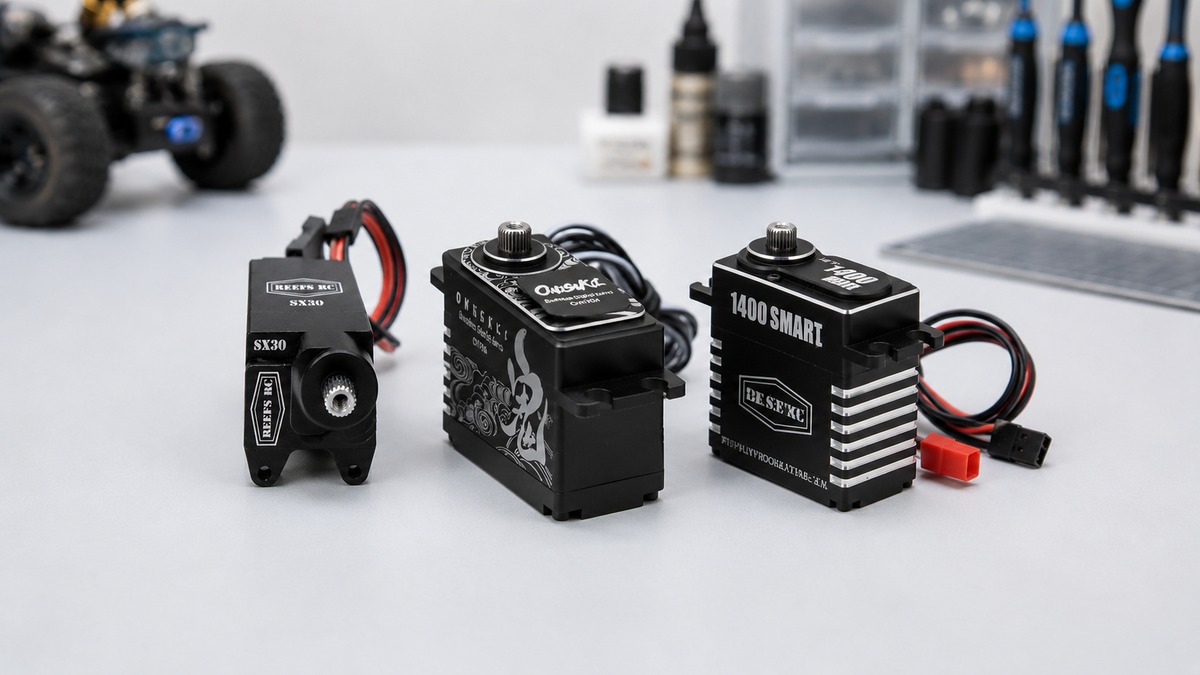
How to Choose the Right RC Servo for Your Build
Intro
Servos usually get ignored until the steering feels weak, slow, or flat-out useless.
That is when the guessing starts. Bigger torque number, faster speed, metal gears, waterproof case. The right servo is not the one with the flashiest label. It is the one that fits the build and does the job.
The Core Idea (In Plain English)
An RC servo turns your steering input into real movement at the wheels.
The right one has enough torque to move the tires under load, enough speed to keep steering response sharp, the right case size to fit the chassis, and voltage support that matches your receiver power or BEC output. A crawler usually wants more holding power and control. A basher usually wants toughness and decent speed. A racer usually wants fast response without vague steering feel. If you want the bigger picture on how driving style changes what parts make sense, How Driving Style Affects Your RC Setup helps frame that part clearly.
In plain English, choose the servo that matches the rig's weight, tire load, steering demand, fitment, and voltage instead of just chasing the biggest number.
When This Matters (Use Cases)
Scenario 1
You put bigger tires on a basher and the stock steering suddenly feels slow and weak.
That usually means the servo does not have enough torque or gear strength for the extra load.
Scenario 2
You are building a crawler and want precise steering on rocks instead of vague movement and stalled wheels.
That is where higher torque, better holding power, metal gears, and low-speed control start to matter a lot more.
Scenario 3
You are setting up a race buggy and the steering works, but it never feels sharp enough entering corners.
That is usually where servo speed, response, and clean voltage support matter more than just brute torque.
What to Look For / Key Considerations
- Torque matters most when the rig is heavy or runs larger tires
- Speed matters most when you want quicker steering response
- Metal gears usually make more sense for heavy use and harder hits
- Plastic gears are fine for lighter rigs or cheaper replacement setups
- Waterproofing matters if the rig sees mud, puddles, or trail use
- Servo size has to match the chassis and mounting pattern
- Voltage support has to match your receiver power or BEC output
- A stronger servo only helps if the steering system is not binding
- A crawler, basher, and racer do not need the exact same servo priorities
Common Mistakes
- Buying by torque alone and ignoring servo speed
- Assuming every metal gear servo is automatically the right answer
- Forgetting to check fitment before ordering
- Ignoring BEC or voltage limits on the electronics side
- Upgrading the servo when the steering linkage is the real problem
- Overbuying a giant servo for a build that does not need it
Real Talk
Most servo upgrades only make sense when the stock unit is clearly holding the rig back.
If the steering feels lazy, stalls under load, strips gears, or never really feels precise, the servo is either too weak, too slow, the wrong size, or getting the wrong voltage.
Keep Your Rig Dialed
- Use the Parts Finder to find parts that fit your exact RC
- Learn more in RC Gear Mesh Explained
- Keep dialing it in with How to Choose the Right Pinion Gear
Closing
The right servo makes the steering feel cleaner, quicker, and more predictable.
Pick for torque, speed, fitment, durability, and voltage, and the rest usually gets a lot easier.