
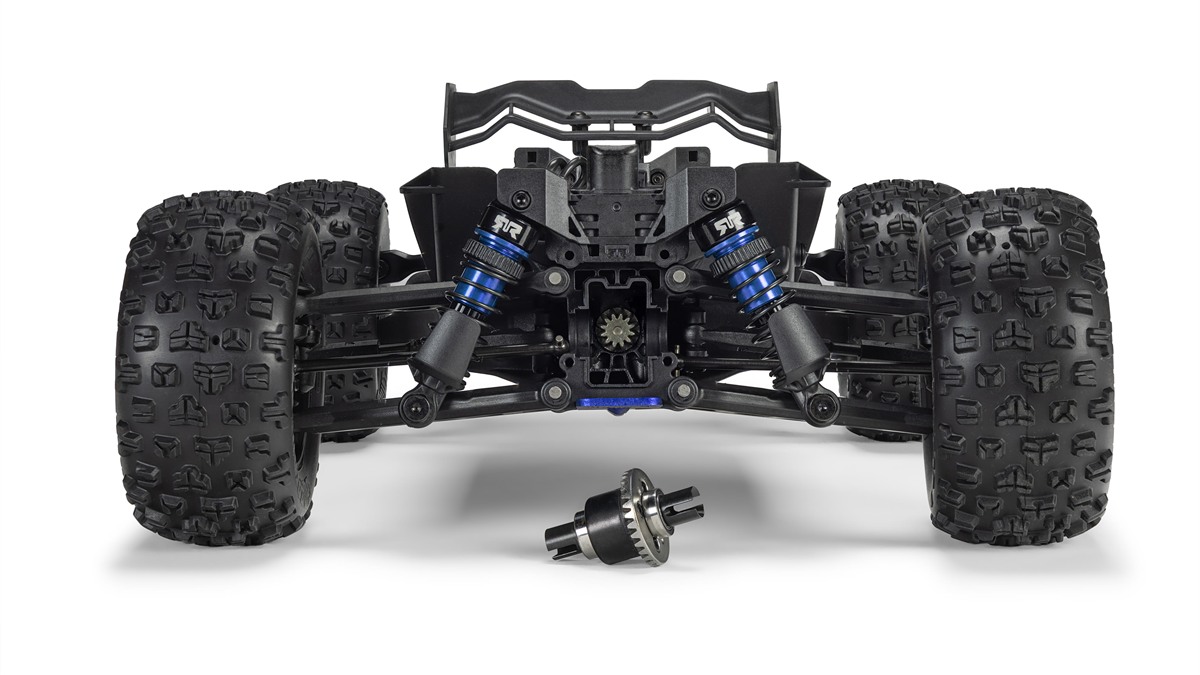
How to Choose the Right Pinion Gear Without Cooking Your Setup
Intro
Pinion gearing seems simple until the car comes back hot, slow, or sounding angry.
It is one of the easiest changes you can make to an RC, and one of the fastest ways to create problems if you guess wrong.
Pick the right pinion gear, though, and the whole setup feels more alive without pushing it past what it can handle.
The Core Idea (In Plain English)
The pinion gear helps decide how your motor's power gets delivered to the drivetrain.
Go bigger on the pinion and you usually get more top speed, but you also put more load on the motor and electronics.
Go smaller and you usually get better acceleration, easier temps, and a setup that feels less stressed.
That is why gearing is always a balance:
- Speed vs heat
- Punch vs runtime
- Performance vs reliability
It also depends on what motor system you are running. Gearing changes can feel very different depending on whether the setup is brushed or brushless.
Before you start swapping gears, it helps to have the right parts ready so you are not trying to tune around worn hardware.
When This Matters (Use Cases)
Scenario 1
- You upgraded to a more powerful motor and now the car feels fast but runs hotter than expected
- A too-large pinion is one of the first things to check
Scenario 2
- You want more speed on a big open lot or for speed-run style driving
- Gearing can help, but only if motor temps and drivetrain strength stay under control
Scenario 3
- You drive in grass, loose dirt, or heavy off-road conditions
- Those surfaces load the drivetrain harder, so aggressive gearing can punish the setup fast
What to Look For / Key Considerations
- Start conservative and work up instead of jumping straight to the biggest pinion that fits
- Watch motor and ESC temperatures after every gearing change
- Think about surface, tire size, battery voltage, and vehicle weight together
- Bigger tires effectively gear the car taller, even before you change the pinion
- Check gear mesh every time you swap gears
- Listen for extra noise or drivetrain roughness after changes
- Know your goal before you tune: more speed, more punch, cooler running, or better runtime
Common Mistakes
- Gearing up too aggressively right after a motor upgrade
- Ignoring temperatures because the car feels fast
- Forgetting that bigger tires change the load on the whole system
- Chasing top speed on surfaces that already work the drivetrain hard
- Swapping gears without checking mesh or worn spur teeth
Real Talk
A lot of people treat pinion changes like free speed.
Sometimes they are. Sometimes they are just a quieter way to overwork your setup.
The smart move is usually small changes, short test runs, and honest temp checks. If the car gets hotter than it should, sounds rough, or feels bogged down, the answer is not always more gear. A cooler, balanced setup is almost always more fun than one that is fast for three minutes and miserable after that.
Keep Your Rig Dialed
- Use the Parts Finder to find parts that fit your exact RC
- Compare power systems in Brushed vs Brushless Motors
- Learn the basics in RC Gear Mesh Explained
Closing
The right pinion gear wakes a car up.
The wrong one cooks it.
Tune smart and let the setup tell you what it wants.