
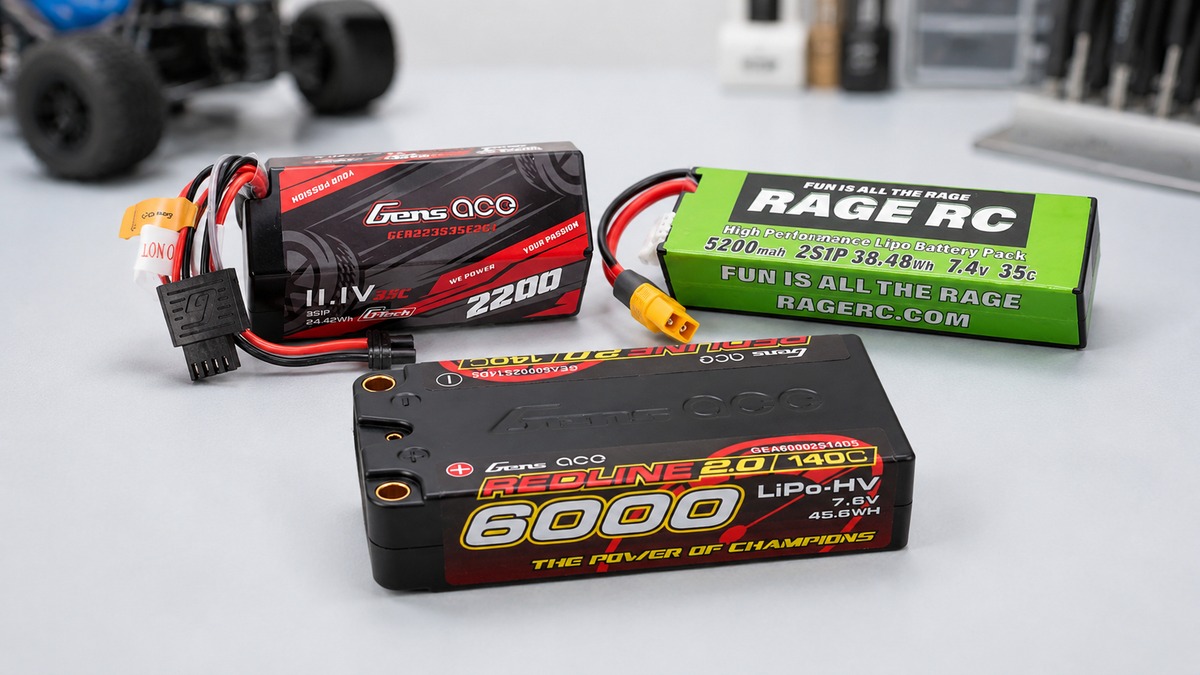
How to Choose the Right RC Battery Without Guessing
Intro
Picking an RC battery sounds simple until you are staring at voltage, capacity, C ratings, and pack sizes that all look close enough to work.
Then the questions start. Will it fit? Will it run hot? Will it feel weak? Will it wake the car up the right way?
The good news is you do not need to overcomplicate it. You just need to match the battery to the vehicle and how you actually drive.
The Core Idea (In Plain English)
The right RC battery is not just about more power. It is about balance.
Battery choice affects speed, runtime, weight, throttle feel, and how hard the rest of the setup has to work. A pack that looks great on paper can still be the wrong move if it does not fit the tray, overloads the electronics, or makes the car harder to control.
The main things to think about are capacity, C rating, voltage, and physical size. If you want a broader look at pack basics before you buy, LiPo Batteries 101 is a good place to start.
Capacity mostly affects runtime. C rating affects how hard the pack can deliver power. Fitment matters because a battery that technically works but barely fits is usually a pain in the long run.
When This Matters (Use Cases)
Scenario 1
- You are replacing the stock battery and want a little more punch without making the car harder to drive
- A smarter battery choice can improve the feel of the whole setup without turning it into a headache
Scenario 2
- You are upgrading electronics and do not want the battery to be the weak link
- Battery choice affects heat, consistency, and how the system handles extra load
Scenario 3
- You found a battery that looks close enough, but you are not sure about size or connector fit
- That is where small fitment details save you from frustration later
What to Look For / Key Considerations
- Match voltage to what your ESC and motor are rated for
- Use capacity to choose runtime, not bragging rights
- Treat C rating like part of the whole setup, not the only number that matters
- Check battery tray dimensions before you buy
- Think about connector type, wire exit, and pack height along with overall length
- Remember that a heavier battery can change balance and handling
- Choose the pack that fits your driving style, not just the one with the biggest numbers
Common Mistakes
- Buying the highest voltage pack the electronics might tolerate
- Ignoring fitment because the dimensions seem close enough
- Assuming higher C rating always means a better real-world result
- Choosing runtime so big that the pack becomes bulky and awkward
- Forgetting that more battery can also mean more heat and drivetrain stress
Real Talk
A lot of battery shopping goes sideways because people chase numbers instead of the setup.
The best battery is usually the one that fits cleanly, runs the way you want, and does not ask the rest of the car to do more than it should.
If you mostly bash, a balanced pack that gives good runtime and consistent power is usually the better move than something huge and aggressive. A rig that feels right every pack is worth more than one wild setup that is annoying to live with.
Keep Your Rig Dialed
- Use the Parts Finder to find parts that fit your exact RC
- If you already know the category you need, browse RC batteries and power options
- Match your charger in How to Choose the Right RC Battery Charger
- Keep temps in check with the RC Motor Temperature Guide
Closing
Choose the battery for the whole setup.
That is when the car starts feeling right.